Aarhus University logo
SpaCe – Aarhus Space Centre
Aarhus University Interdisciplinary Centre for Space and Earth Observations
"SpaCe - Aarhus Space Centre is organised within six thematic themes, each led by theme leads. The six themes are: Life in Space, Earth Observation, Education and Learning, Innovation Hub, Space and Humanities, and Space Exploration."
Working groups have a specific focus and area of interest, and relate to one or more of the five themes. If you want to know more about the activities in one or more of the working groups, feel free to reach out to the work group chairs.
SpaCe supports a broad variety of projects - projects that run over a longer og shorter periode of time
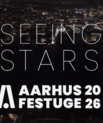
A new video from Aarhus Festival captures how the area around Rådhusparken and Musikhusparken was darkened for Seeing Stars – and how people gathered to share a rare moment of darkness in the city.
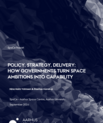
A new report from SpaCe – Aarhus Space Centre compares space governance in six European coun-tries and asks what governments need to put in place to turn political ambitions into lasting capa-bilities.
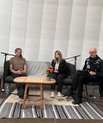
A live episode of RumSnak during Aarhus Festuge brought Professor Hans Kjeldsen together with hosts Tina Ibsen and Anders Høeg Nissen to discuss light pollution, astronomy and the value of a dark night sky.
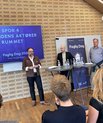
Who will shape the future of space, and who is responsible for what happens there? These questions brought space technology, security and international treaties into the discussion at Faglig Dag for political science students at Aarhus University.
When the lights went out across central Aarhus for Seeing Stars, SpaCe – Aarhus Space Centre joined Ole Rømer Observatory and the Remote Teaching Telescope, FUT, in inviting the public to explore the night sky through telescopes.
How can satellite radar reveal movements in the ground, buildings and infrastructure? Join this short course on 28–29 October to explore how SAR interferometry is used for 3D reconstruction and deformation monitoring.
Join us, as Dale Kedwards, Assistant Professor in Old Norse-Icelandic, Fellow of King's College, University of Cambridge explores the attraction and symbolism of Old Norse mythology in Space science
Join us at Tir na nÓg for an evening dedicated to the wonders of the universe. The specific theme and speakers for this edition will be announced as soon as possible!
SAVE THE DATE
SpaCe day 2027 will take place the 21st of January.