
AU SpaCe Day 2026: Exploring Space Through Interdisciplinary Collaboration
From Danish astronaut fitness innovations to the evolving role of space research in national security, AU SpaCe Day 2026 brought together 100 researchers, students, and industry leaders for a day of interdisciplinary dialogue. The event explored how life sciences, data-driven discovery, and cross-sector collaboration are shaping the future of space.

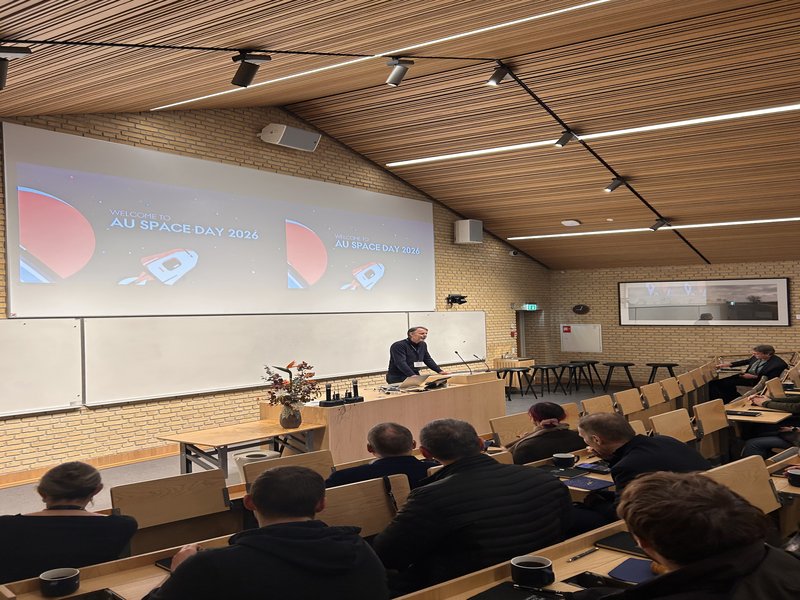
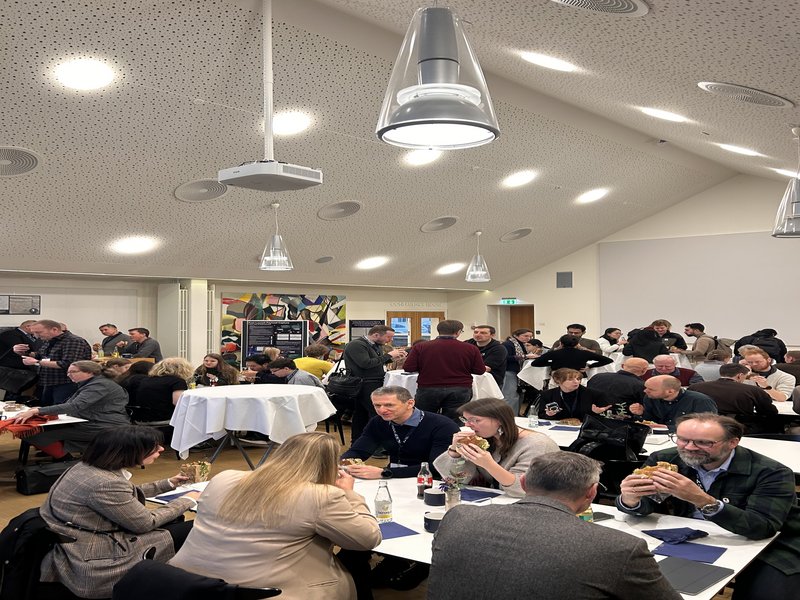
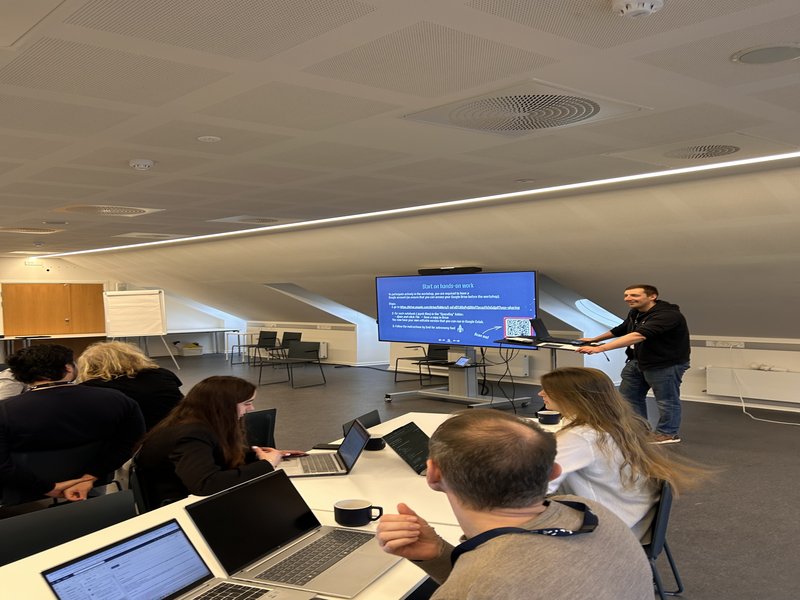
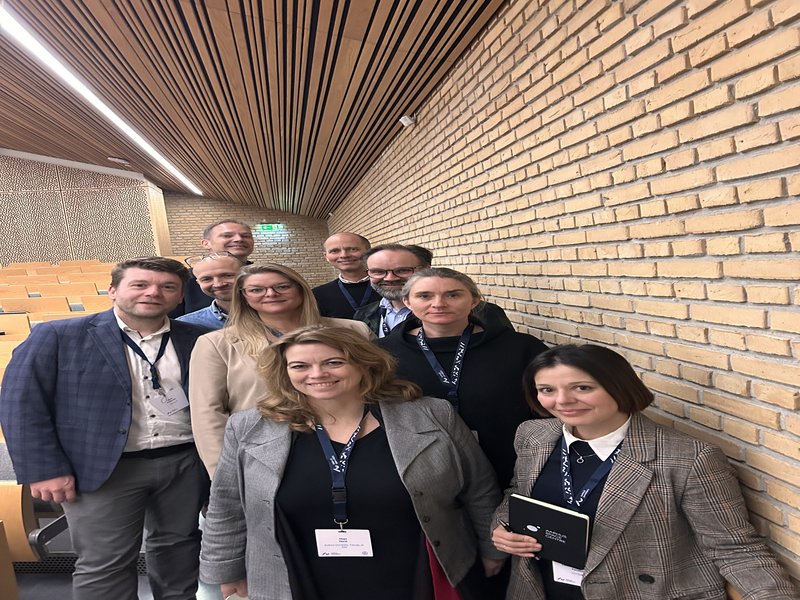
On 22 January 2026, Aarhus Space Centre welcomed 100 participants to AU SpaCe Day 2026, bringing together researchers, students, and invited speakers for a full day dedicated to space-related research and collaboration. The event attracted a diverse mix of both new participants and familiar faces, highlighting the strong and growing space community at Aarhus University.
Inspiring Keynotes on Space Technology and Missions
The programme featured a strong lineup of keynote sessions that showcased both applied space technology and scientific research. Thomas A.E. Andersen opened the day with a keynote on Essential Danish exercise equipment for astronauts, offering insight into how Danish-developed technology contributes directly to human spaceflight – a session bridging to Aarhus Space Centre’s new theme “Life in Space”
This was followed by a keynote on The STEP mission, presented by Hans Kjeldsen, Samuel Grund Sørensen, and Karsten Frank Brogaard, who provided an overview of the mission’s scientific objectives and its role within Danish space research.
Dynamic Pitch Session and Poster Presentations
A lively pitch session offered participants a rapid overview of 11 space-related activities across Aarhus University. The dynamic 3 minutes pitch format created strong engagement and interaction, giving insight into the breadth of ongoing initiatives and sparking conversations that continued throughout the day.
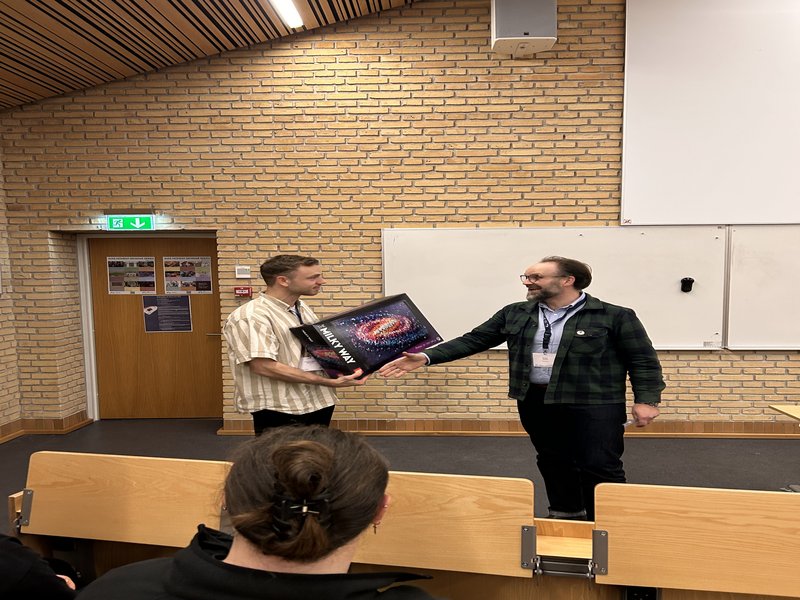
The AU SpaCe Day also featured a poster session with contributions from 13 participants, providing further insight into ongoing research, projects, and initiatives across disciplines. At the end of the AU SpaCe Day, the Best Poster Award was presented to Astronomy on Tap, represented by Frederik Würtz Sørensen, in recognition of Astronomy on Tap’s ability to create engagement and communicate many different aspects of space science and its engagement with a broad audience.
Splinter Sessions: Deep Dives into Space Across Disciplines
The splinter sessions allowed participants to explore specific themes in greater depth and highlighted the interdisciplinary breadth of research and collaboration at Aarhus Space Centre.
Space Research and Securitization: Cross-Sector Collaboration
One splinter session focused on Space research and securitization: cross-sector collaboration and was moderated by Nina Holm Vohnsen. The session explored the complex intersections between space activities, defense, industry, policy, and research, and brought together a broad panel representing diverse perspectives. The panel included Maja Horst, Søren Pedersen, Casper Andersen, Karsten Bubber Outzen, Michael Lumholt, Desiree Ferreira, and Anne Sofie Bramsen Dahlmann.
As moderator of this session, Nina Holm Vohnsen describes “The discussion took as its starting point the ways in which space research is being reshaped by a changing geopolitical landscape and growing security concerns. Rather than treating securitization as an abstract backdrop, we explored how these shifts are experienced and navigated across different institutional positions. Across two rounds of discussion, we addressed questions such as the role of the university in society, and how long-standing values of openness and academic freedom may come under pressure as universities are increasingly expected to contribute to national defence agendas, as well as the importance of a clear division of roles between university-based research and commercial innovation, allowing each to focus on what it does best. We also examined how the growing availability of funding tied to security concerns may redirect both academic research and commercial development — and what other forms of inquiry or innovation this might come at the expense of — and, finally, how universities, funders, industry, and researchers can engage responsibly with security-related development without closing down the openness, curiosity, and international cooperation that have long characterized space research.”
Space & Life Sciences
The second splinter session focused on Space & life sciences and was moderated by Rune H. Jacobsen. The session explored how strong life science research environments can contribute to space research and future missions, with discussions spanning biology, biotechnology, engineering, and applied space technologies.
The panel featured Tina Santl-Temkiv, Simon Lind Kappel, Jens Vinge Nygaard, Thomas A.E. Andersen, and Kai Finster. Discussions centred on how existing expertise can be translated into space applications and how interdisciplinary collaboration can open new research avenues.
Working with Space Data: From Insight to Hands-On Experience
Later in the programme, participants were introduced to concrete examples of how space data is used across disciplines in the session plenum session “Using Space Data”, followed by hands-on workshops that provided practical experience with real-world datasets.
The workshops offered participants the opportunity to work directly with space data. One track focused on Earth observation data, while another explored astronomical data, giving participants insight into different approaches and applications of space-based data.
The National Space Strategy – Future Opportunities
The final session of the day focused on The National Space Strategy – future opportunities, presented by Hans Kjeldsen. The session provided an overview of Denmark’s upcoming national space missions and the broader strategic framework for the coming decade, outlining how capacity building, collaboration, and funding structures will support future space activities. The presentation also included an introduction to the process that has taken place since March 2025, working towards describing the future framework for national space missions under Initiative 3 in the Strategy for Space Research and Innovation.
Aarhus Space Centre would like to thank all participants, speakers, moderators, and contributors for making AU SpaCe Day 2026 a great success. The day gave rise to numerous new connections and collaboration opportunities, and we look forward to continuing the dialogue and building on the momentum created during the event.