
The report "Framework for National Space Missions" is now published
What could provide a strong foundation for Denmark’s future national space missions? The newly published report "Framework for National Space Missions" brings together input from across the Danish space sector and provides a shared basis for the way forward. Built on a broad sector-wide process involving universities, research institutions and industry, the report reflects the strength, ambition and momentum behind future Danish space missions.
The Framework for National Space Missions report is now available. It is the result of a broad, sector-wide process that engaged the entire Danish space community — from universities and research institutions to industry — in shaping Denmark's path forward for national space missions.
"This report is the product of a truly collective effort. What makes it significant is not only what it recommends, but how those recommendations came about — through dialogue and collaboration across the entire Danish space sector. Researchers, industry partners, and institutions have worked together to build a shared foundation, and the result reflects both the strength and the ambition that exists in Danish space today. There is real momentum in the sector right now, and it is crucial that we harness it — by working across boundaries and moving forward together. This report gives Denmark a concrete and well-grounded basis for doing exactly that." — Professor Hans Kjeldsen, Aarhus University, leader of the project management group, Framework for National Space Missions and director of SpaCe - Aarhus Space Centre.
A process built on broad involvement
The initiative was launched in response to the Danish Agency for Higher Education and Science's call "On the Lookout for New Ørsted Missions" (April 2025), which called for a new framework to guide Denmark's future activities in space. The process unfolded through several stages designed to ensure that voices from across the sector were heard and reflected in the final report.
The process began with a national survey in May–June 2025, to which more than 130 representatives from universities, private companies, governmental institutions, and other key organisations responded. Their input provided a broad mapping of the challenges, opportunities, needs, and priorities related to future Danish space missions.
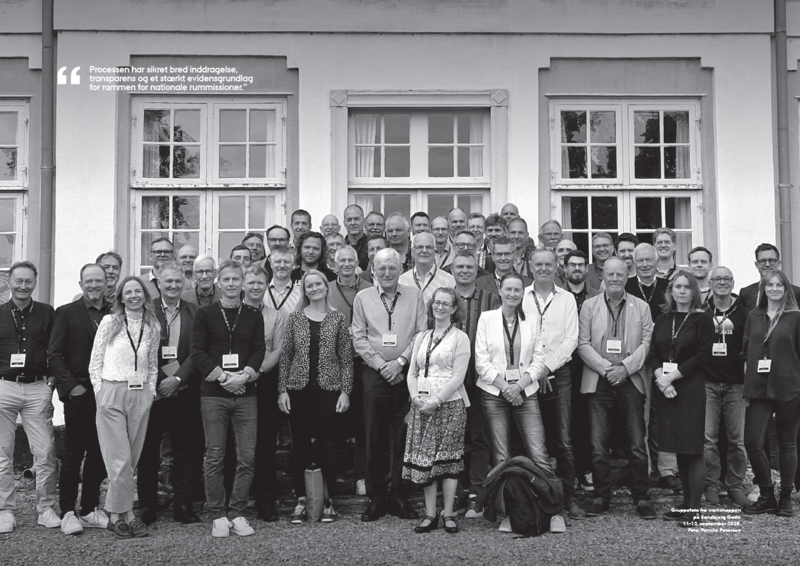
In September 2025, seventy participants gathered at Sandbjerg Gods for a one-and-a-half-day workshop. Working across four themes — programme goals, key technologies and innovation, collaboration, and governance and funding — participants from across the sector contributed directly to shaping the substance of the report.
The draft was subsequently discussed at review seminars in Aarhus and Copenhagen in November and December 2025, followed by an open consultation period in which anyone in the Danish space sector could submit written comments. The report was hereafter then finalised by the project group and steering committee and submitted to the Danish Agency for Higher Education and Science in February 2026.
The broad involvement throughout the process was intended not only to identify the sector's needs, but also to build on the strengths that already exist across Danish universities and companies. Christian Kjær Monsson, Head of Research at Danish Industry, says:
“Across Danish companies and universities, we have the capabilities to develop highly specialised space missions. But that potential can only be realised if we are able to draw on our shared strengths. Together, we have now outlined a path for how Denmark can select and develop space missions that both build on Denmark’s unique capabilities and create concrete solutions. This is a first, but crucial, step.”
A heartfelt thank you
This report would not have been possible without the remarkable engagement of the Danish space sector. To everyone who completed the survey, attended the workshop at Sandbjerg, participated in the review seminars, or submitted written comments — thank you! Your contributions have been essential in shaping a report that genuinely reflects the breadth and ambition of Danish space research and innovation.
A special thank you also goes to the steering committee, led by Head of DTU Space Henning Skriver, and to the project management group, led by Professor Hans Kjeldsen, Aarhus University — as well as to all members of both groups for their dedicated work.
You can find the report here – both in English and Danish
The report "Framework for National Space Missions"
Contact:
Professor Hans Kjeldsen
Department of Physics and Astronomy, Aarhus University
Director of SpaCe – Aarhus Space Centre
hans@phys.au.dk
+45 23 38 21 60